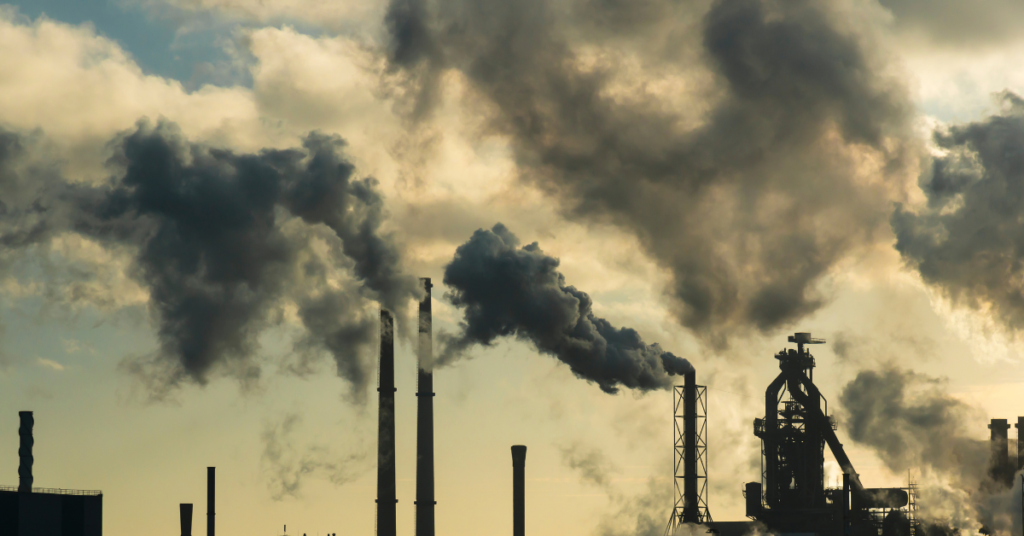
Particulate matter — also called aerosols or air pollution — is made up of microscopic particles suspended in Earth’s atmosphere. Some of it occurs naturally, released by wildfires and volcanic eruptions. The rest comes from human activity, such as car exhaust and power plants, and forms through chemical reactions involving gases like sulphur dioxide (SO2) and nitrogen oxides (NOx), which include nitric oxide (NO) and nitrogen dioxide (NO2). Because these precursor gases drive pollution levels, cutting their emissions usually lowers the overall amount of particulate matter in the air.
Monitoring particulate matter matters for two big reasons: its effect on the climate and its toll on human health. Exposure has been linked to asthma, lung cancer, prenatal complications, and a range of respiratory diseases.

Why air pollution is visible from space
Air pollution is often hard to spot from the ground, so it surprises many people that it shows up clearly from orbit.
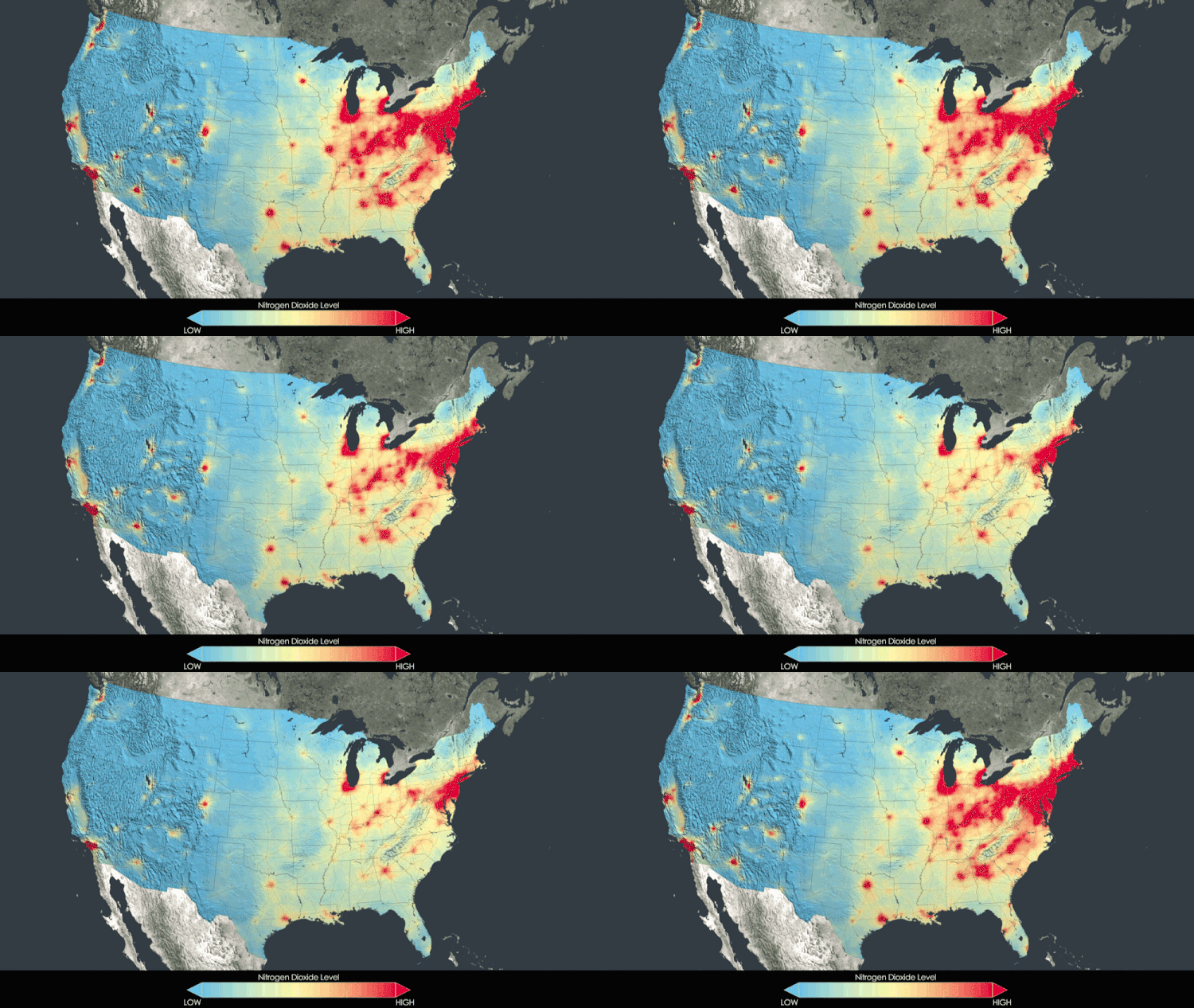
The Ozone Monitoring Instrument (OMI), aboard NASA’s Aura satellite, measures NO2 — one of the precursor gases behind particulate pollution. Most of the NO2 that OMI detects sits close to the surface, so patterns in the data closely reflect what is actually happening on the ground. That direct link is why OMI is one of the most widely used instruments for studying air pollution from space.
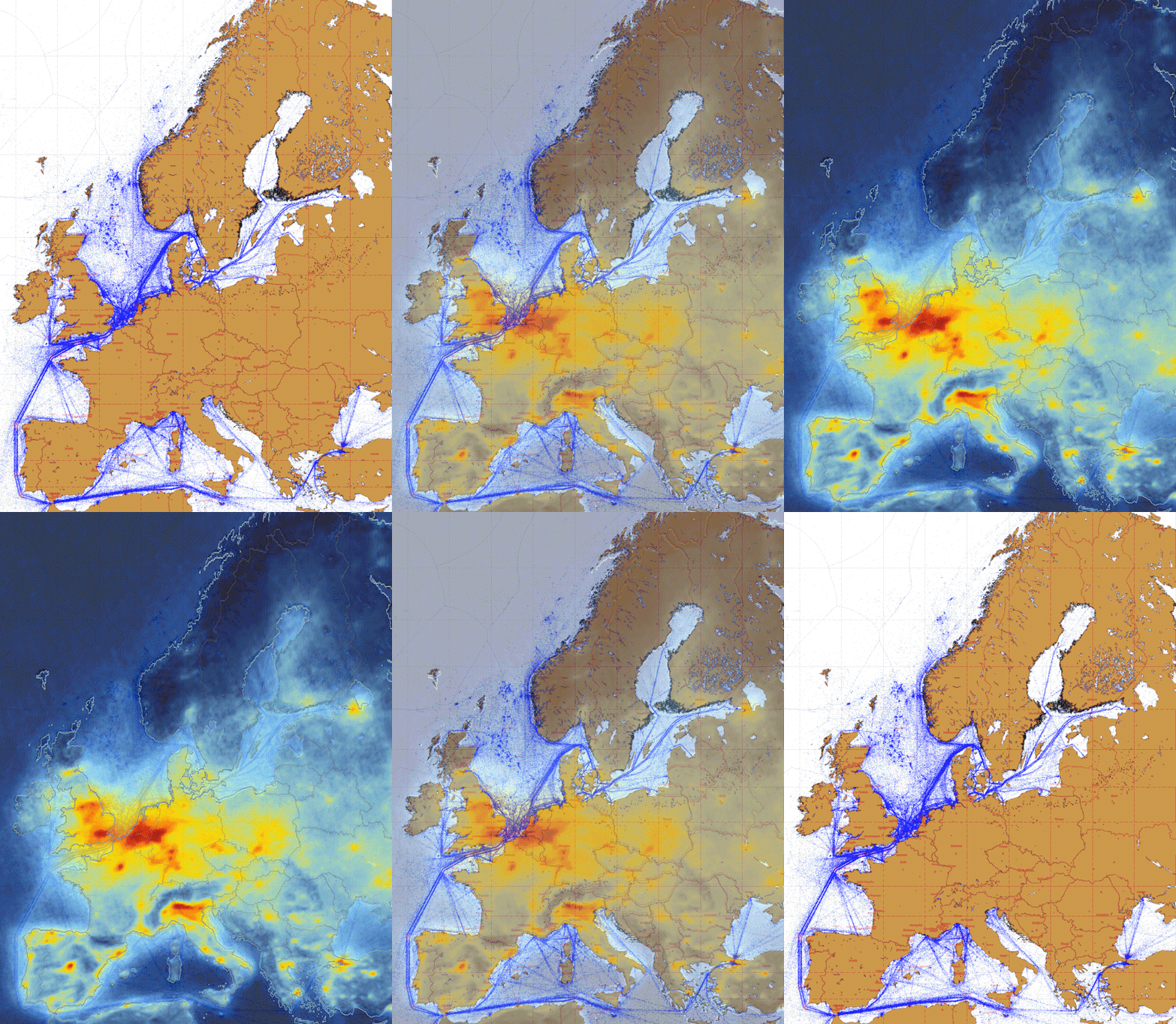
The detail can be striking. Thanks to OMI data, highways and shipping lanes are clearly visible from space. As piracy off the coast of Somalia intensified between 2004 and 2009, researchers at the University of Bremen observed that pollution tracks from ships moved farther and farther out to sea, mirroring the routes vessels took to avoid pirates, recalled Daven Henze, associate professor of mechanical engineering at the University of Colorado Boulder.
NO2 measurements have other uses too. They help assess socio-economic activity — emissions are a strong wealth marker — and explain daily or weekly swings in output. In some regions, for example, the predominant religion can account for emission drops on a particular day. Scientists also track global NOx trends, comparing them against national pollution-reduction goals to gauge whether emissions-control policies are working over time.
Building sharper air pollution monitoring models to protect health and climate
Most aerosol distribution models are built at a global scale, with spatial resolution spanning several hundred kilometres. That makes it hard to assess exposure at the city level. To close the gap, Henze and his team are refining the models down to a 10 km resolution for the UN Climate and Clean Air Coalition (CCAC).
The stakes are high. According to Henze, using a coarse global model — at the 200–300 km scale — to estimate aerosol exposure can introduce errors of 30–40%, because that resolution is far too broad to capture how population density shifts between urban and rural areas.
So in 2015, Henze set out to improve the global model’s accuracy by folding in satellite data on where people actually live, adjusting aerosol concentrations to match population patterns across urban and rural areas. The new model — developed with Randall Martin’s group at Dalhousie — drew on particulate-matter data from the MODIS, MISR, SeaWiFS, and CALIPSO instruments to estimate fine surface particulate pollution (PM2.5) at high resolution.
Using this combined model to calculate exposure at a far finer resolution than coarse global simulations, the team built a toolkit for the CCAC that links pollutant exposure to emissions, called LEAP-IBC. It is offered to member nations seeking UN funding for pollution-reduction policies. Not every country has the resources for detailed modelling and health-impact analysis — but with this toolkit, any nation can use open satellite data to estimate how a specific strategy, such as cutting power-plant emissions, would affect human health and the climate.
The bottom line: cleaner air, one satellite at a time
The World Health Organization (WHO) estimates that fine particulate air pollution (PM2.5) causes roughly 3% of deaths from cardiopulmonary disease, about 5% of deaths from cancer of the trachea, bronchus, and lung, and around 1% of deaths from acute respiratory infections in children under five, worldwide.
As satellite sensors improve and the number of satellites in orbit grows, toolkits like the one built by Henze and Martin will only get more precise — giving countries the ability to track the effectiveness of their mitigation strategies daily, or even hourly. Using satellite data to find new ways to reduce pollution exposure could help save millions of lives every year.
Interested in working with this kind of data? Explore open and commercial Earth observation imagery on the SkyWatch platform.