On July 30, 2026, Rocket Lab announced a multi-launch agreement with Japanese SAR operator iQPS to fly three dedicated Electron missions, each carrying a QPS-SAR satellite. The first flies from Launch Complex 1 in late 2027. It extends a partnership in which Electron has already delivered seven QPS-SAR satellites with 100% mission success since 2023, with the next satellite, QPS-SAR-13, targeting a launch no earlier than August 2026 after a June abort.
The headline everyone will run is ‘radar constellation grows.’ That’s true, and it’s the least interesting part.
What the deal actually signals
You don’t sign a three-launch, dedicated agreement for a capability you’re testing. You sign it for a capability you’re standardizing on. Radar is no longer being flown one satellite at a time to see if the market shows up. It is being booked out years in advance, by the launch, as a committed supply line. That’s a maturity signal, not a novelty one.
And it fits the demand data. Synthetic aperture radar is a defense-led market. Fortune Business Insights puts defense at roughly 53.7% of the SAR imagery market, and government and military at around 47.8% of the broader satellite data services market in 2026, per Coherent Market Insights. Those buyers pay for all-weather, day-and-night imaging because their missions can’t stall when the sky clouds over. Commercial operators in energy, maritime, mining, and insurance are now chasing the same reliability for the same reason: the assets they watch don’t wait for a clear afternoon.
Why another constellation isn’t the leverage point
Here’s the SkyWatch view, and it runs slightly against the grain. The all-weather imaging boom is real and welcome. But for the analyst or operator who actually has to use this data, one more radar constellation, on its own, doesn’t solve much. It adds a provider. It adds a contract. It adds a licensing model and a delivery format. Multiply that across every SAR operator now scaling, alongside the optical providers you already work with, and the boom starts to look less like abundance and more like fragmentation.
Radar is only valuable when you can access it and fuse it with optical inside one workflow. The operational question is never ‘radar or optical.’ It’s ‘confirm through cloud, at night, what the optical pass showed in daylight, on the same map, on the same day, without a procurement project first.’ A radar image locked inside a single operator’s catalog, priced and formatted its own way, doesn’t answer that question. The access layer does.
The bottleneck is still procurement, not orbit
Every launch like this one is a reminder that the supply problem is being solved. Rocket Lab and iQPS are handling orbit. What they can’t hand a practitioner is a way to buy radar and optical from a dozen different providers, compare them on one map, and pay for only what a specific question needs. That’s the actual bottleneck, and it lives on the ground, in procurement and integration, not in the launch manifest.
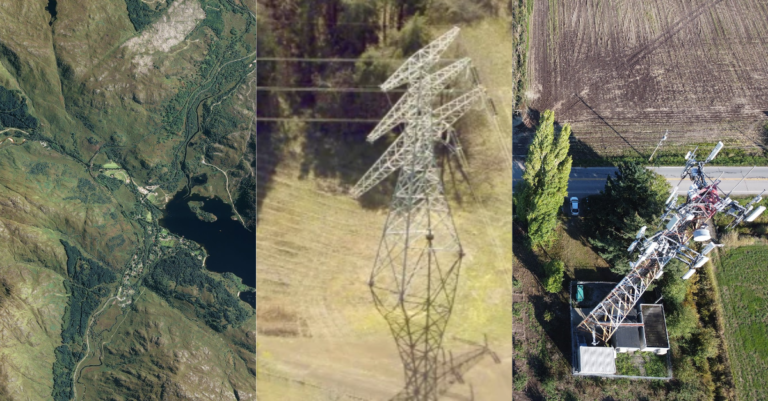
This is the gap SkyWatch is built to close. As a neutral, vendor-agnostic gateway to imagery across 400-plus providers, satellite, aerial, drone, optical and radar, SkyWatch treats source diversity as the product rather than the problem. Explore lets teams discover and purchase across providers instead of locking to one. Build gives developers pay-as-you-go API access to that same breadth. Map drops the imagery straight into GIS tools like ArcGIS Pro, where a radar layer and an optical layer become one comparable view.
The takeaway
Celebrate the launches! More all-weather capability in orbit is genuinely good for the industry. But don’t mistake the constellation for the advantage. The advantage in 2026 goes to whoever can reach across all of it: optical and radar, satellite and aerial and drone, from whatever provider flies it, inside a single workflow.